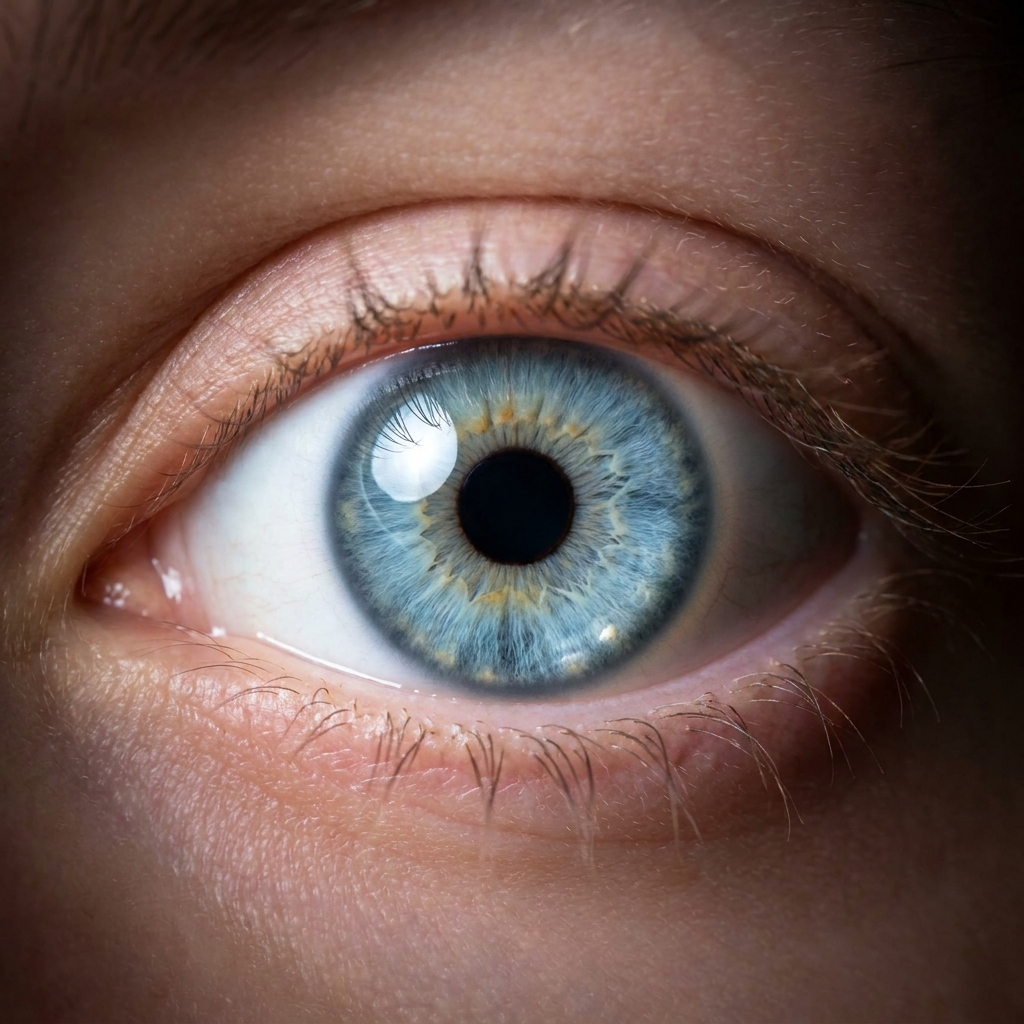
A brain,
built for the eye.
OCTON's deep AI mirrors the cognitive architecture of the human brain. A fast pattern-recall layer surfaces what's “off” in milliseconds — the way the hippocampus retrieves a memory. A slow, deliberate reasoning layer maps it across twelve retinal pathologies and systemic risk signals — the way the neocortex builds a posterior under uncertainty.
Two modules.
One retina.
When a fundus image lands in OCTON, both modules fire in parallel. The Hippocampus emits a fast pattern recall and an urgency tier within seconds. The Neocortex then constructs a structured Bayesian posterior across twelve conditions and three systemic risk axes.
Hippocampus
OCTON Preliminary Analysis · streaming triage
Pattern-recall over a learned medical library. Surfaces first impression, observed anomalies, urgency tier, and a suggested next step in under three seconds. The hippocampus doesn't reason — it remembers.
Neocortex
OCTON In-Depth Analysis · structured reasoning
Bayesian reasoning across twelve conditions and three systemic axes. Emits calibrated probabilities, severities, key findings, and follow-up actions. The neocortex doesn't just recognize — it explains.
Wired by Hebb.
Reasoned by Bayes.
Hebbian association
Donald Hebb's 1949 postulate: “when an axon of cell A repeatedly takes part in firing cell B, some growth process or metabolic change takes place such that A's efficiency in firing B is increased.”In OCTON, co-occurring retinal signs strengthen the link to a disease pattern.
- / Co-occurring features ignite linked memory traces
- / Pattern recall < 3 seconds
- / Provides the urgency tier and triage
Bayesian inference
Reverend Thomas Bayes' theorem: belief updates given evidence. OCTON's Neocortex computes a posterior probability for each of twelve conditions — weighing the visual likelihood against population priors and severity gradients.
- / Calibrated probabilities, not gut feels
- / Updates as new evidence arrives
- / Weighs priors from population data
120,000,000
cortical columns.
The human neocortex is built from ~120 million cortical columns — repeating microcircuits, each a self-contained vertical stack of six neuron layers. They fire in coordinated waves at gamma frequencies. OCTON's deep reasoning models that scale and tempo.
Beyond the fundus.
Inside your visual cortex.
Every finding traces back to the brain regions it would impact. You and your clinician see not just what the eye saw — but what the brain would lose.
nodes
mapped
latency
Microvascular ischemia stops upstream signal — V1 receives fewer photoreceptor packets.
End-to-end flow.
Smartphone live camera or upload.
Encrypted object storage.
Hippocampus → Neocortex streams to your screen.
Severity, findings, follow-up.
Built for screening,
not replacement.
OCTON is a clinical decision-support companion. It exists to raise flags early — at the point of the smartphone, before symptoms. Every finding should be reviewed by a licensed ophthalmologist.